
AI for Project Managers: Achieving More, Stress Less
A I • Jun 06,2024

What You’ill Discover:
- Enhanced Planning and Decision-Making with AI
- Effective Project Execution
- Improved Productivity and Quality
- Resource Optimization and Team Management
- Evolving Role of the Project Manager
- Bottom line
Project management is experiencing some major changes right now. Gone are the days when AI was just sci-fi. At present, how we handle everyday processes is significantly shifting. Imagine a place where smart automation handles boring chores, spots problems before they pop up, and fine-tunes resource use with pinpoint accuracy. With AI stepping into project management, things have never been this exciting or streamlined.
A recent survey by Capterra, a technology review firm, paints a compelling picture: a whopping 93% of project managers reported positive ROI from their company’s AI project management tools or tech investments over the past year. Even more astounding, only 8% of surveyed companies have no plans to embrace AI in their workflows. You can see from this data just how much impact AI has on managing projects. Everything’s becoming easier to control and track thanks to technology!
Are you ready to unlock the power of AI and propel your projects to extraordinary heights? Here, we’ll look at how AI is being practically used and highlight some cases where it has succeeded.
Buckle up as we prepare to be amazed by its power to revolutionize project management!
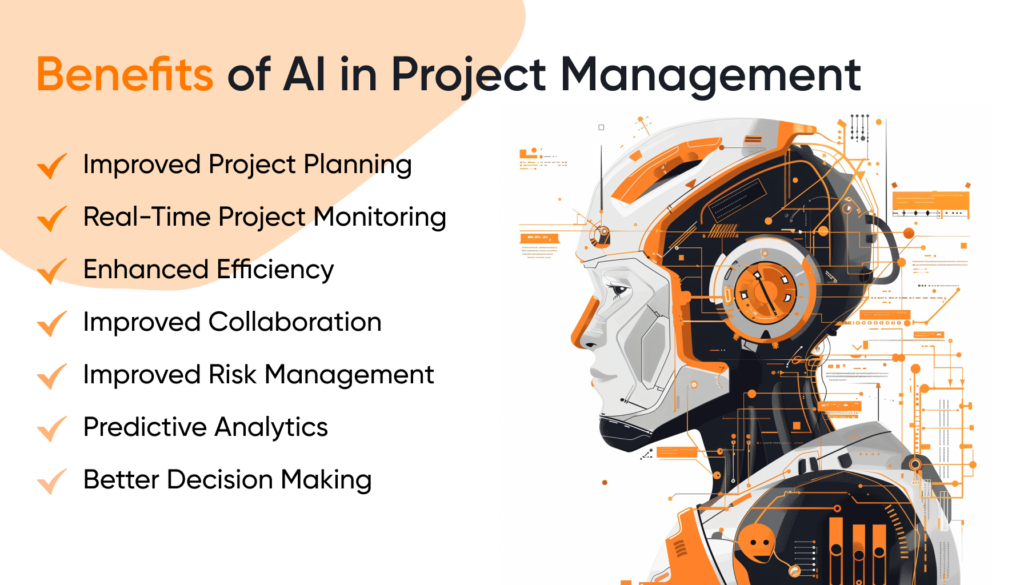
1. Enhanced Planning and Decision-Making with AI: A Path to Success
AI is revolutionizing project management by empowering teams with data-driven insights and intelligent tools. Let’s explore how AI enhances planning and decision-making across key areas:
- Prioritization and Scheduling: Streamlining Tasks and Timelines
AI transforms task prioritization by analyzing historical data to identify critical tasks and dependencies. You’ll need to be less robotic sounding by changing sentence structure and using different word choices. This ensures the most important work gets done first, keeping projects on track. Additionally, AI creates dynamic schedules that adapt to changing circumstances, minimizing resource conflicts and delays.
- Modeling Project Scenarios: Simulating Success
AI enables proactive planning through what-if analysis, simulating various project scenarios under different conditions. AI is like a project manager’s sixth sense—it can feel potential problems before they even show up, allowing for swift action and avoiding budget overruns. With AI giving them a heads-up on what could go wrong, project managers can cook up contingency plans to keep the project sailing smoothly.
- Adjusting Projects to Different Methodologies: Choosing the Right Fit
AI helps project managers select the most suitable project management methodology (Agile, Scrum, Waterfall) by analyzing project needs and team dynamics. This ensures the chosen approach aligns with project goals and team capabilities. Additionally, AI continuously monitors progress and recommends adjustments to the chosen methodology, allowing for a flexible approach that adapts to changing circumstances.
- Predictive Analytics: Foresight for Informed Decisions
AI empowers project managers with predictive analytics, identifying potential risks and their likelihood of occurrence. This enables proactive mitigation strategies, allowing project managers to address minor issues before they snowball and derail the project. AI also forecasts resource needs throughout the project lifecycle, preventing bottlenecks and ensuring efficient resource allocation.
Real-world Examples:
An oil and gas E&P company plagued by inefficient scheduling and limited visibility found a solution in AI-powered software Actenum DSO/Upstream. This innovative tool streamlined scheduling, enhanced planning, and boosted collaboration, resulting in faster well-completion times, reduced idle time, and improved resource utilization. AI revolutionized their operations, leading to greater efficiency and cost savings.
A leading financial firm facing the challenges of market volatility and complex projects implemented an AI system with powerful predictive analytics capabilities. This AI system leveraged historical data to identify potential risks, optimize resource allocation based on future needs, and played nicely with your existing project management toolbox. The results were significant: reduced costs, improved risk management, increased agility in adapting to market changes, and ultimately, optimized project performance across the board.
2. Effective Project Execution: AI Optimizes Every Step
In today’s fast-paced business environment, successful project execution is paramount. AI has become a game-changer, empowering project teams to optimize every stage of the project lifecycle, from strategic planning to flawless delivery.
- Real-Time Visibility: Unveiling the Pulse of Your Project
AI revolutionizes project execution by replacing static reports with real-time progress tracking. This provides a constantly updated picture of project health, allowing managers to identify roadblocks early, make data-driven resource adjustments, and keep stakeholders informed. This fosters continuous transparency throughout the project lifecycle.
- Proactive Risk Management: Mitigating Threats Before They Arise
AI surpasses simple risk identification by enabling proactive mitigation strategies. By analyzing historical data and project progress, AI predicts potential issues, recommends mitigation strategies, and even automates risk response for predefined low-level problems. This streamlines the process and minimizes the impact of identified risks.
- Enhanced Collaboration: Seamless Teamwork
AI breaks down communication barriers and fosters seamless teamwork. It creates a central communication hub, delivers real-time alerts and updates, and simplifies knowledge sharing. This ensures everyone is on the same page, working towards shared goals.
Real-world Examples:
A manufacturing company grappled with a deluge of information, unproductive meetings, and gaps in accountability. To address these challenges, they adopted Fellow, an AI-powered solution that centralizes meeting and task management. This transformative approach led to increased team participation (richer discussions), high manager approval (90.3%), improved meeting culture (75% positive shift), and better accountability & organization.
Magna International, a global automotive supplier, needed a way to manage its complex just-in-time (JIT) delivery operations. They implemented a Project44 AI solution to track shipments in real-time, identify potential delays, and make proactive decisions to keep production lines running smoothly. The results were impressive. On-time deliveries increased by 40%, and the volume of shipments doubled without the need for additional staff. This not only reduced costs but also led to significant efficiency improvements.
3. Improved Productivity and Quality: Empowering Project Success
As innovation continues to accelerate, project managers are faced with the challenge of adapting and integrating new tools and approaches into their workflow. While this can seem daunting, embracing innovation can significantly enhance project efficiency and success.
- Task Automation for Repetitive Tasks: Automate, Focus, Win
Project managers often find themselves bogged down by repetitive administrative tasks, hindering their ability to focus on strategic initiatives. Task automation offers a solution, freeing up time for more creative and impactful work. By leveraging software tools, project managers can automate tasks like email notifications, data entry, report generation, and scheduling, streamlining processes, reducing errors, and enhancing overall project efficiency.
- Advanced Testing and QA: Quality Built In
Project success hinges on delivering high-quality results. Advanced testing and QA methodologies guarantee this by catching issues early. Imagine leveraging automated tools to identify software defects before they become problems. Continuous integration and delivery pipelines streamline testing and deployment, while user acceptance testing ensures the final product meets user needs. By adopting these practices, project managers minimize rework and deliver flawless projects.
- Virtual Assistants: Your AI-Powered Sidekick
Project managers wear many hats. Virtual assistants, powered by AI, lighten the load by handling administrative tasks. These digital helpers can schedule meetings, manage emails and calendars, and even provide real-time project updates. This frees project managers to focus on strategic initiatives, allowing them to lead their teams to success.
Real-world Examples:
Terakeet, an OAO software company, struggled with prioritizing maintenance tasks due to unclear issue reporting and context switching. They implemented an AI-powered tool that linked code to issues, boosting resolution rates by over 70% and improving sprint planning.
Insurance giant tackles financial requests with automation: an intelligent document processing (IDP) and robotic process automation (RPA) solution on Appian streamlined financial request handling. This automation boosted speed, accuracy, and decision-making, while reducing costs and manual work.
Maor Investments, a venture capital firm, implemented an AI-powered report generator Storydoc, enabling them to create visually appealing and interactive reports. This led to improved investor engagement, a stronger brand image, and increased efficiency in report creation.
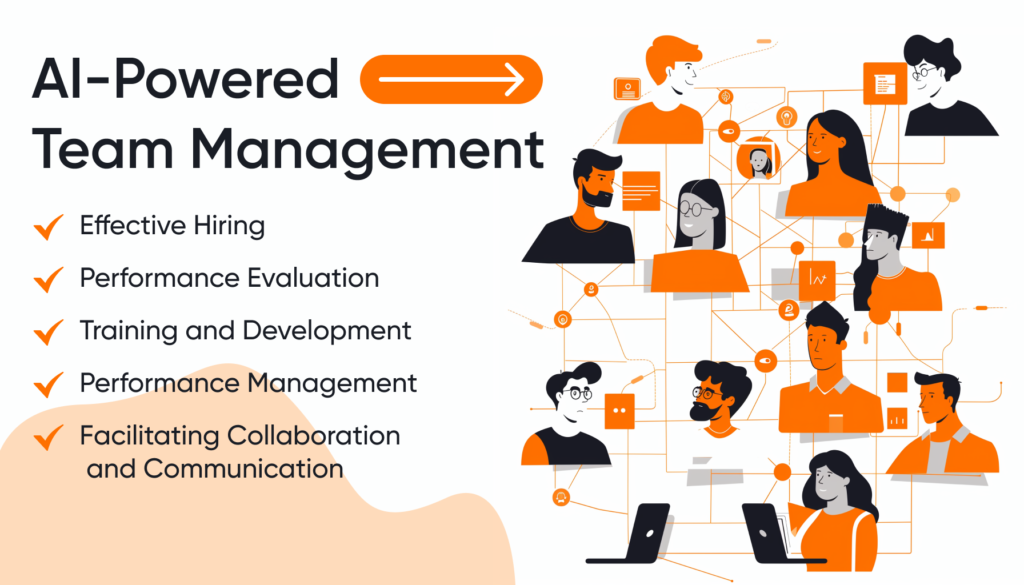
4. Team Management: Empowering Agility and Collaboration
In today’s dynamic business environment, organizations face the challenge of effectively utilizing their workforce to achieve their goals. By implementing AI-powered tools and fostering a collaborative culture, organizations can optimize resource allocation, enhance productivity, and deliver exceptional results.
- Skills Matching and Team Building: Synergy for Peak Performance
AI-powered tools revolutionize skills matching and team building, enabling organizations to uncover hidden talents, align skills with projects, build balanced teams, and empower continuous learning.
- Dynamic Workload Allocation: Striking the Right Balance
Efficient workload allocation is crucial for maximizing team productivity and preventing burnout. Dynamic workload allocation tools empower organizations to assess workload capacity, adjust workloads dynamically, optimize for fairness and efficiency, and engage in predictive resource planning.
- Real-time Collaboration Tools: Level up Your Teamwork
Effective collaboration is key to any project’s success, especially in remote work environments. Real-time collaboration tools empower teams to communicate seamlessly, share project updates, collaborate on documents, and break down silos.
Real-world Examples:
Clearstory, a construction tech startup, boosts meeting efficiency and employee satisfaction with Equal Time, an AI-powered platform that ensures everyone’s voice is heard. This inclusive tool uses artificial intelligence to balance discussions, capture ideas effectively, and keep meetings flowing smoothly. The result? More engaged employees and a streamlined workflow.
Teichert, a construction leader, tackled bidding errors and communication gaps with an AI assistant (InQuarry). This digital tool optimized bids, improved project management, and empowered their workforce. By analyzing past data, InQuarry reduced bidding risks and helped win more projects. Real-time data and communication improved resource allocation and prevented delays.
Project Manager: Strategist, Not Conductor
Imagine your project managers with a secret weapon: a tireless, data-crunching assistant that automates reports, identifies hidden trends, and predicts potential roadblocks before they arise. This is the power of AI in project management.
AI revolutionizes project management, but human expertise remains vital. Here’s what empowers your team:
- Tech-Savvy Leaders: Embrace new tools, not deep technical expertise.
- Data-Driven Decisions: Invest in basic data analysis to leverage AI insights.
- Emotional Intelligence: Human touch is irreplaceable. Foster strong team leadership.
- Strategic Vision: AI provides data, but you make the strategic calls.
These skills ensure your project leaders excel in the AI-driven future. The days of manual data entry might be numbered, but a PM role is evolving, not vanishing.
Bottom Line
So, is AI rendering project managers obsolete? Absolutely not. AI acts as a powerful tool, not a competitor. It tackles repetitive tasks, freeing project managers to excel in areas where human expertise shines: strategic thinking, fostering team dynamics, and navigating complex challenges.
Embrace the change, upskill your team, and together you’ll unlock the full potential of the exciting new era of project management.
*****
Thanks for reading! We hope you gained valuable insights into how project managers can leverage AI to enhance their work. Share your thoughts and questions in the comments below!
Best regards,
the A1V Lab Team
Previos Article Should All Teachers Be Replaced by AI?
Next Article Insurance Meets AI: Revolution in the Making